
WordPress vs Custom Code: Which Is Right for Your Client?
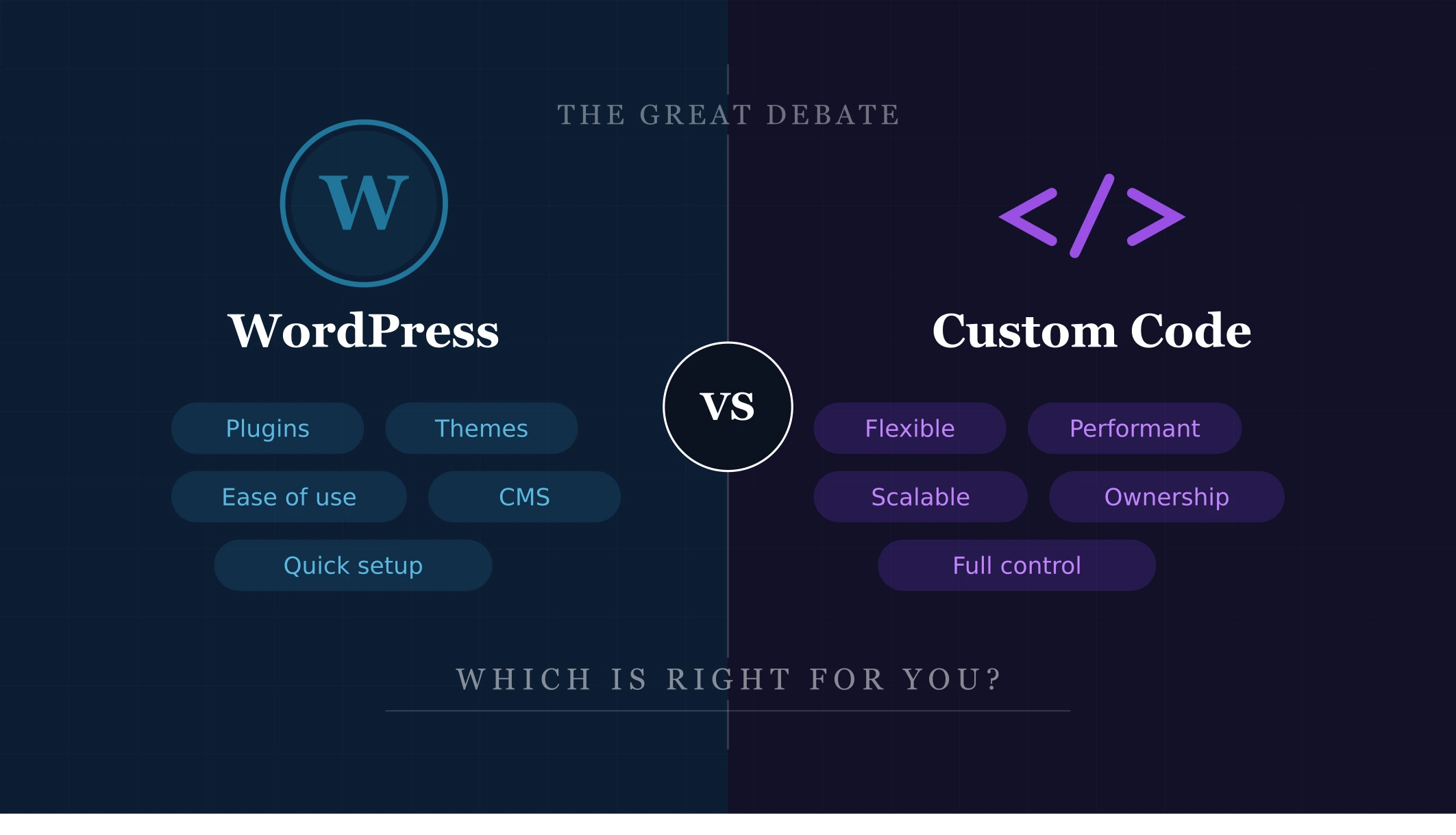
Navigating the Dilemma: WordPress vs Custom Code US Agency Perspectives
As a US-based digital agency owner, you face a recurring crossroads with every new project: should you build on a flexible Content Management System (CMS) like WordPress, or opt for a fully custom-coded solution? This decision isn't just about technical preference; it’s a strategic business choice that impacts your profit margins, your client’s long-term satisfaction, and your team’s internal workflow. In the competitive American market, delivering a high-end aesthetic while maintaining operational efficiency is the key to scaling.
When weighing WordPress vs custom code US agency partners often look at the immediate design requirements. However, the choice also dictates how easily your client can manage their site after hand-off. A boutique law firm in New York has very different needs than a high-growth SaaS startup in Silicon Valley. Understanding the nuances of these two paths allows you to position your agency as a strategic consultant rather than just a service provider.
At Web Month, we specialize in helping agencies navigate these waters through white-label design services. Whether you need the rapid deployment of a theme-based build or the pixel-perfect precision of a custom front-end, the goal is always the same: delivering a product that makes your agency look like a hero. Let’s dive into the core factors that should drive your recommendation.
The Case for WordPress: Speed, Scalability, and Client Empowerment
WordPress powers over 40% of the internet for a reason. For the average American small-to-medium business (SMB), it offers a balance of professional design and user-friendly management. When discussing WordPress vs custom code US agency teams often highlight the 'turnkey' nature of CMS platforms. With a robust ecosystem of plugins and themes, you can achieve complex layouts and functionalities without reinventing the wheel, which is essential for projects with tight deadlines.
From a design perspective, WordPress has evolved far beyond basic templates. Modern page builders and Gutenberg blocks allow white-label designers to create bespoke visual experiences that feel entirely custom. This is particularly beneficial for agencies targeting US clients who need to update their own blogs, change promotional banners, or add new team members without calling a developer every time. It reduces the 'friction' of ownership, leading to higher client retention and fewer support tickets for your team.
Furthermore, the SEO advantages of WordPress are well-documented. US agencies focusing on local SEO or content marketing find that the platform’s native structure and available tools make it easier to rank in competitive American search markets. By choosing WordPress, you are often providing a platform that is already optimized for the growth strategies your clients are likely to pursue in the future.
When Custom Code Wins: Performance and Total Creative Control
While WordPress is versatile, there are scenarios where 'off-the-shelf' simply won't cut it. For high-end luxury brands or innovative tech firms, a custom-coded site (using HTML, CSS, JS, or frameworks like React) offers a level of performance and unique branding that a CMS can struggle to match. When comparing WordPress vs custom code US agency experts often point to 'bloat' as a deciding factor. Custom sites only load the code they need, resulting in lightning-fast speeds that satisfy both Google’s Core Web Vitals and the impatient modern consumer.
Custom coding allows for 'pixel-perfect' design execution. If your client has a very specific, non-standard vision for their UI/UX—perhaps involving complex animations or unconventional navigation—custom code is the way to go. It removes the constraints of a grid system or a pre-defined theme structure. This is often the preferred route for enterprise-level US clients who view their website as a proprietary piece of software rather than just a marketing brochure.
Security is another significant consideration. Because WordPress is so popular, it is a frequent target for automated bots. A custom-coded site has a smaller footprint and is inherently more difficult to target with common exploits. For American agencies working with clients in high-security sectors like finance or healthcare, the 'closed' nature of a custom build can be a major selling point during the pitch process.
Profitability and Project Timelines in the US Market
In the US agency world, time is quite literally money. Your choice between WordPress vs custom code US agency workflows will directly impact your project’s ROI. WordPress projects typically have a shorter production cycle. This allows your agency to increase volume and take on more clients per quarter. Because the labor hours are lower, you can offer competitive pricing to mid-market clients while still maintaining a healthy margin.
Custom code projects, conversely, command a premium price tag. They require more hours for design, development, and rigorous QA testing across different browsers and devices. While the total contract value is higher, the risk of 'scope creep' is also greater. Agencies must be diligent in their project management to ensure that the custom features don't eat into the profit. For many US agencies, the sweet spot is offering both: WordPress for the bulk of their clientele and custom builds for high-ticket, enterprise accounts.
- WordPress Tip: Use a standardized stack of plugins and a parent theme to streamline your white-label design process.
- Custom Tip: Ensure you have a clear documentation process so that future updates don't require the original developer to be present.
- Hybrid Approach: Consider 'Headless WordPress' for clients who want the ease of a CMS backend with the performance of a custom front-end.
Maintenance and Long-Term Client Relationships
The relationship with a client doesn't end at launch. In fact, for many US agencies, recurring revenue from maintenance plans is the lifeblood of the business. When considering WordPress vs custom code US agency owners must think about who will be maintaining the site in two years. WordPress requires regular updates to the core software, themes, and plugins. This creates a natural opportunity for a monthly maintenance package, providing your agency with steady, predictable income.
Custom-coded sites are generally more 'set it and forget it' in terms of software updates, but they are much harder for the client to modify on their own. This creates a different kind of dependency. While this can lead to more billable hours for minor changes, it can also frustrate clients who want more autonomy. It is vital to set expectations early. If a client wants to be 'hands-on,' a custom-coded site without a user-friendly admin panel might lead to a strained relationship down the road.
Actionable advice: Always provide a 'post-launch' roadmap regardless of the platform. For WordPress, show them how to use the dashboard. For custom sites, explain the process for requesting changes. In the US market, transparency and communication are what build long-term trust and lead to those all-important referrals.
Choosing the Right Path for Your Agency Brand
Ultimately, the WordPress vs custom code US agency debate is about brand positioning. Does your agency want to be known as the 'fast and agile' partner that helps businesses get online quickly and effectively? Or do you want to be the 'boutique digital architect' creating one-of-a-kind masterpieces? There is no wrong answer, but your choice should align with your internal talent and your target client profile.
Many successful US agencies partner with white-label providers like Web Month to handle the heavy lifting of design and implementation. This allows the agency to focus on strategy and client acquisition while we ensure the technical execution is flawless. By outsourcing the design phase, you can offer both WordPress and custom solutions without having to hire a massive in-house team, effectively scaling your agency's capabilities overnight.
Consider your current portfolio. If you find yourself turning away leads because their budget is too small for custom code, or if you're losing high-end pitches because your WordPress sites feel too 'templated,' it may be time to diversify your offering. Providing a tiered approach ensures you never have to leave money on the table.
Conclusion: Delivering Value to the American Client
Whether you choose WordPress or custom code, the goal remains the same: solving the client's problem and helping their business grow. The US market is diverse, and there is plenty of room for both approaches. WordPress offers speed, ease of use, and excellent SEO potential, making it perfect for the majority of American businesses. Custom code offers unparalleled performance and creative freedom, catering to high-growth brands and enterprise needs.
As an agency leader, your role is to guide your client through this decision by focusing on their business goals, budget, and long-term technical needs. By understanding the pros and cons of WordPress vs custom code US agency owners can make informed recommendations that lead to successful projects and happy clients. At Web Month, we are here to support that journey with professional white-label design services tailored to your specific needs. Let's build something great together.